Industry Focus
Project Control in Mechanical & Plant Engineering
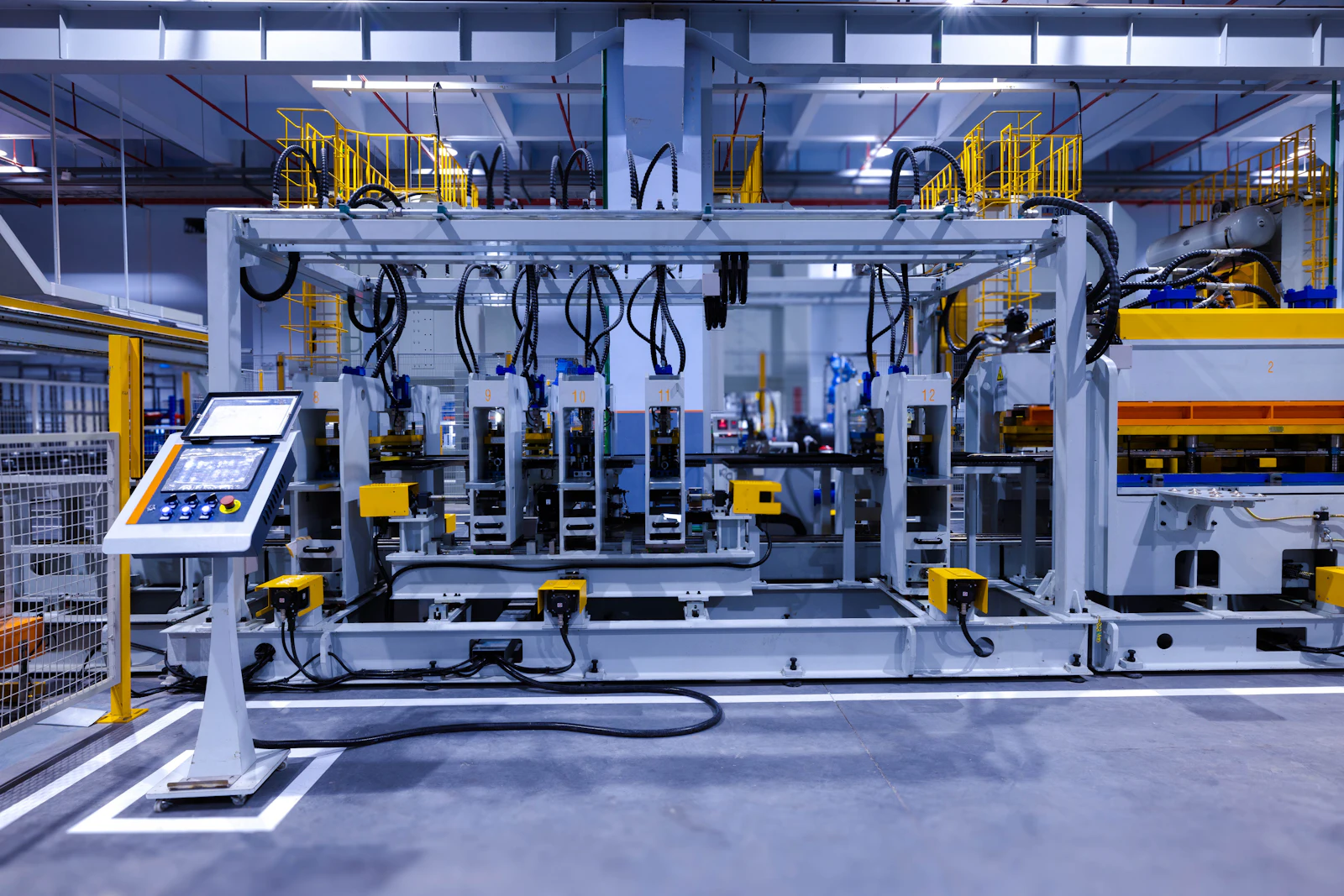
In short
Project management in mechanical and plant engineering means steering long-running engineering projects with shared resources across design, manufacturing, and assembly – including suppliers on the critical path. What matters is a connected view of schedules, capacity, and dependencies across all parallel projects. Linetrack from Stuttgart has already supported over 4,000 completed industrial projects – in use at Schnaithmann, Stoll Gruppe, bavius, and LANG Technik.











4000 +
completed
industrial projects
270 +
parallel projects
at a single customer
1512 +
projects managed
in parallel
10
working days from
kick-off to go-live
Figures from live Linetrack implementations, as of August 2026.
The reality in mechanical engineering
Why project-driven
mechanical engineers lose the overview
Not because people plan badly – but because planning has grown over years into disconnected Excel lists with no shared context. Four patterns repeat in almost every mechanical and plant engineering company.
Excel silos grown over time
Every department keeps its own list, and the same resource is named differently in three different files. There is no data-driven basis for decisions – connections between projects stay invisible because the complexity swallows them. In practice, Linetrack customers retire several such separate planning lists at once – four out of five of them plain Excel files.

Decisions made by gut feeling
Delivery dates get promised without anyone being able to say how loaded design, programming, assembly, and commissioning really are over the coming weeks. Discussions run on subjective impressions, not on data. Lack of transparency is the trigger every single Linetrack customer named before adopting the system.

Fully booked and underutilized at the same time
Orders get turned down with "we're fully booked" – while hours sit idle in other departments. Without a cross-project view, nobody knows where capacity is actually free and where the real bottleneck sits.
Manual agreements nobody else sees
What two department heads agree on stays between them. For everyone else it's invisible. Hours spent maintaining lists keep the system limping along – yet it's never actually up to date.
A different rulebook
Why project management in mechanical engineering
works differently than elsewhere
Projects in mechanical and plant engineering follow different rules than construction or IT projects. Three traits make the difference – and explain why standard project management fails here.
Many locations instead of one site
In construction there is one shared place of work – the site. In mechanical engineering, a project spreads across internal departments, the customer, and the entire supply chain. Design, electrical design, programming, controls engineering, purchasing, manufacturing, assembly, service, and documentation all interlock – in different places, at different times.
Many planners instead of one team
In agency and marketing projects, one team plans its own project. In mechanical and plant engineering, many departments with their own planners work in parallel on a single project – design, programming, manufacturing, assembly, commissioning. Each plans its own part, and all the parts have to fit together. This collaborative, multi-planner setup is exactly what overwhelms simple project tools.
Change is the norm
New customer requests, breakdowns, delayed suppliers: in mechanical engineering, a project keeps changing. The more custom the solution and the less it resembles series production, the more activities interlock across departments and people – and the faster any static plan goes out of date.
A mechanical engineering project from design to final acceptance
Across the entire lifecycle – every phase with its own schedules, resources, and dependencies in a single system.
A project in mechanical and plant engineering runs through many phases – from design through purchasing, manufacturing, and assembly to commissioning and final acceptance. Each phase has its own schedules, ties up its own resources, and depends on the one before it: if design slips, everything after it shifts too.
This is exactly where separate tools fall short. They cover individual phases but not the continuous flow. In Linetrack, the entire project lifecycle lives in one system – with all dependencies between phases. That makes it visible at any time how a delay in manufacturing affects assembly and commissioning dates, and which resources are needed when.
The way out of Excel chaos
One data foundation for
all projects, departments, and resources
The solution isn't yet another Excel sheet, and it isn't an ERP add-on either. The ERP knows what already happened – not what happens if an order gets accepted tomorrow. Managing mechanical engineering projects needs its own forward-looking view.
Forecast planning in sales: check promised dates against real utilization before they're promised
Cross-project capacity view: see where the real bottlenecks are – and where capacity is free
Every department in one system: from design through commissioning, without maintaining triple the lists
Suppliers and subcontracted work visible in the plan, not in separate email threads
Simulate scenarios instead of debating them: model the best response to a delay or a failure in advance
For the first time, leadership, project management, and every department have full visibility into what's happening – without endlessly maintaining lists. And they're able to act: on new projects just as much as on incidents in ongoing operations. What such a switch looks like in practice is set out in the Schnaithmann Maschinenbau case study – an automation specialist that brought sales lists, the project plan and the departments’ Excel files together into one system. At MSG Solutions, project planning used to run across separate tools and lists; the case study shows how the old system was fully replaced. At LANG Technik, project plans are now created collaboratively across departments and tracked automatically.
In practice
What mechanical engineers achieve with Linetrack
The benefit shows up exactly where Excel lists and gut feeling used to rule. In practice, status meetings are cut in half: the current state is available in the system at any time, instead of being pieced together weekly from scattered lists
Because bottlenecks and delays become visible earlier, responsiveness to disruptions improves noticeably – problems are anticipated instead of experienced. And because orders are checked against actual utilization, project costs fall: fewer unplanned subcontracts, fewer penalties from missed deadlines.
The most important effect can't be captured in a single number: leadership, project management, and every department have full visibility into what's happening for the first time – and they're able to act, on new projects just as much as on incidents in ongoing operations.
Customer experiences
What our customers in mechanical engineering say
One of these voices comes with the full story: the Krüger & Salecker case study – the forming-machine manufacturer from Bad Schwartau has tracked and managed its project data in one place since.
MSG Solutions uses Linetrack in project management and across departments to plan and steer projects efficiently. The system has completely replaced our old PM tool and now serves as the central platform for scheduling and resource planning.
Thanks to a shared data foundation, we always have a clear overview of the status of all projects and save significant time on portfolio analysis. The workflows are ideally matched to the requirements of mechanical and plant engineering – planning and decisions can be made in a practical, well-founded way as a result.
We especially appreciate the support: the Linetrack team responds quickly, is flexible with further development, and trains our staff in a hands-on way tailored to our processes. You can tell that real mechanical engineering experience goes into it.


"Before Linetrack we used a project management system that didn't give us the transparency we needed in many areas. On top of that, different departments worked with their own isolated planning lists.
With Linetrack we were able to retire those workflows and now have professional, cross-department scheduling and resource planning – from the sales phase through to project tracking. We especially value the collaborative way of working and the close support from the Linetrack team, who adapted the software to our requirements, migrated our legacy data, and trained our staff.
Linetrack isn't just another tool for us – it's a solution that actually works."


"Linetrack has helped us keep an overview of complex development and automation projects. Project plans are now created collaboratively across department boundaries and tracked automatically.
What convinces us most is the simple usability, combined with close contact with the Linetrack team. The flexible rollout and hands-on training meant our team adopted the solution quickly – a clear win for our work."

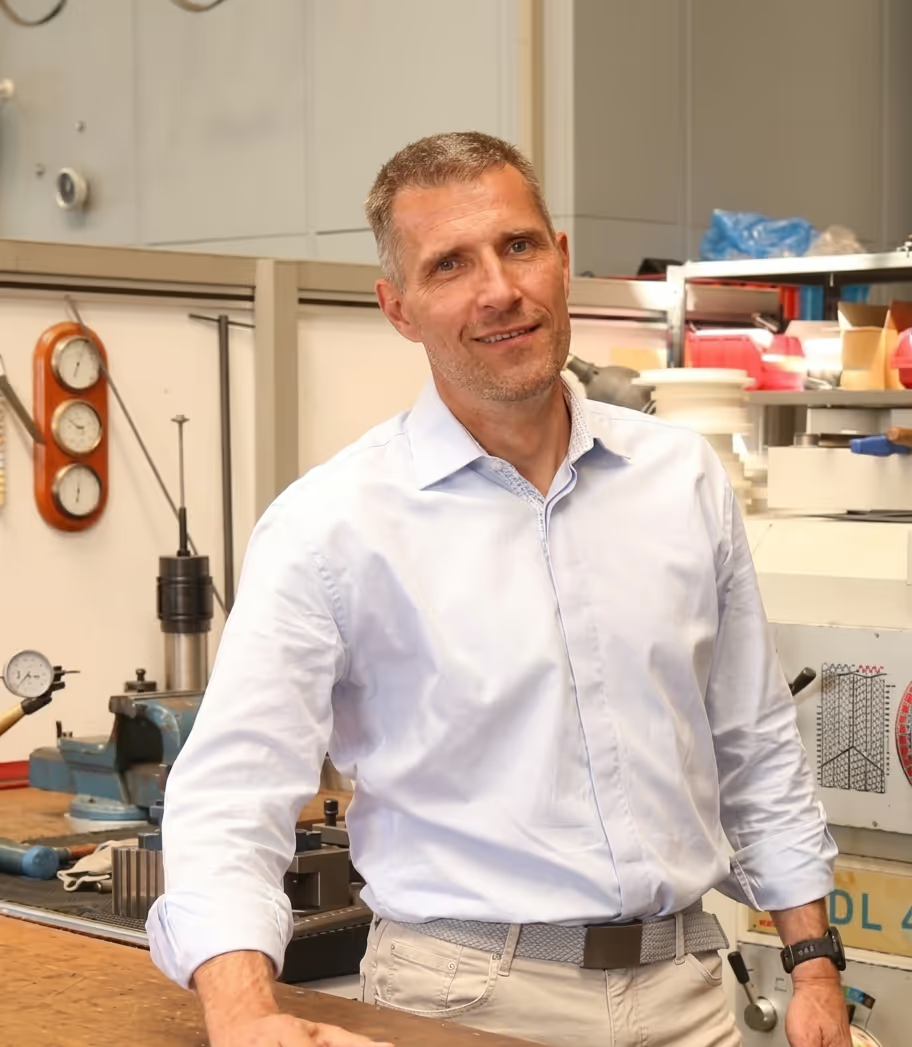
"As a mechanical engineering company, we always struggled to track and manage project data efficiently. With Linetrack we've not only brought transparency into our projects but also significantly increased our productivity.
What impressed us most was the user-friendliness and the way the data is presented, which let us always keep everything in view.
I can recommend Linetrack to other companies without reservation. It's easy to use, highly efficient, and has genuinely simplified our business.
Many thanks to the Linetrack team for a great solution and excellent support!"
FAQ
Frequently asked questions
Still have questions?
Book a time with our team.
What makes project management in mechanical engineering different from other industries?
What makes project management in mechanical engineering different from other industries?
Why aren't MS Project or Excel enough in mechanical engineering?
Why aren't MS Project or Excel enough in mechanical engineering?
Which mechanical engineering companies is Linetrack a good fit for?
Which mechanical engineering companies is Linetrack a good fit for?
How many projects can be managed in parallel with Linetrack?
How many projects can be managed in parallel with Linetrack?
Why do project management rollouts in mechanical engineering often fail?
Why do project management rollouts in mechanical engineering often fail?
Does Linetrack replace the ERP system in mechanical engineering?
Does Linetrack replace the ERP system in mechanical engineering?
Learn more
Linetrack in detail
The features behind connected scheduling and capacity planning: