Capacity Planning: Avoid Bottlenecks, Use Resources Efficiently
Capacity planning in industry: methods, tools, best practices. Identify bottlenecks early, deploy resources effectively, steer projects with confidence.


Bottlenecks in order processing cost industrial companies not only delivery deadlines, but also trust. Anyone running multiple projects in parallel in mechanical and plant engineering, manufacturing, or the process industry knows the pattern: specialists are double-booked, machines sit idle unplanned, and by the end of the quarter, utilization planning shifts on an ad-hoc basis. Capacity planning is the structural answer to this — and it only works if it is data-based, transparent, and continuously maintained. This article shows which methods actually hold up, where the typical pitfalls lie, and how a modern platform simplifies control.
What Is Capacity Planning?
Capacity planning is the process of matching available resources against the demand of ongoing and planned projects. Resources include personnel with specific qualifications, machines and equipment, materials, rooms, and time in the form of working hours and shift models. The goal is to avoid both overload and idle time equally, and to be able to carry out projects under realistic assumptions.
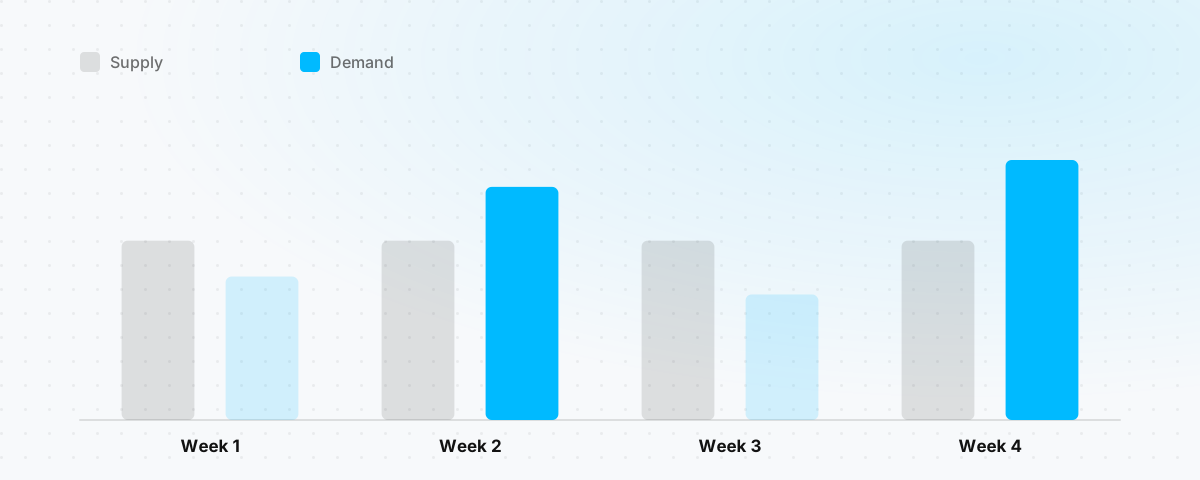
The discipline is divided into two levels with different time horizons:
Strategic Capacity Planning
The strategic horizon spans months to years. At this level, decisions are made about additional shifts, staff expansion, or machine investments.
Operational Capacity Planning
The operational horizon spans days to weeks, with a focus on current orders and short-term bottlenecks. Both levels must work from a shared data basis, otherwise conflicting plans arise between management and shift supervision. The matching use case shows how scheduling and capacity planning can run in one connected system.
Why Capacity Planning Is Indispensable in Industry
Industrial projects are rarely isolated: contract machine-building runs parallel to maintaining the existing portfolio, while specialists are simultaneously needed on-site at customers for commissioning. Without structured capacity planning, conflicts only become visible once they have already escalated. The typical consequences are delayed delivery dates, contractual penalties, unplanned overtime, and declining employee satisfaction. For plan-driven operations, project management software for mechanical and plant engineering brings this view together in one system.
Capacity planning creates the foundation for three central management decisions:
- Order acceptance and delivery date commitments: Only by matching capacity demand against capacity supply does it become clear whether an order is feasible at all by the requested date — the basis for a reliable delivery date commitment instead of a gut-feel promise.
- Prioritization and load distribution: When projects compete, the capacity view determines which order takes precedence and which tasks are moved into free time slots, before an overload turns into a schedule risk.
- Capacity adjustment: Where rescheduling is no longer enough, the supply itself has to change — and the plan shows which lever still works in time: overtime and outsourcing to contract manufacturers take effect at short notice, while staff expansion and machine investments need the long lead time of the strategic level.
Typical Bottlenecks and Mistakes in Capacity Planning
Even a well-thought-out plan fails in practice due to recurring patterns. The most common pitfalls:
- Full utilization as a planning target: Anyone who schedules every single hour loses the ability to react. High utilization and short lead times cannot be maximized at the same time — the specialist literature describes this trade-off as the dilemma of scheduling. On-time delivery suffers as a consequence, because every disruption feeds straight through to the final deadline without a buffer.
- Calculated gross instead of net: Attendance time is not project time. Planning with contractual weekly working hours instead of the net capacity actually available builds an overstatement into every plan that only surfaces later as overtime or a missed date.
- Headcount instead of qualifications: A capacity figure in person-hours assumes that any hour can be substituted for any other. Where a certification, an official approval, or knowledge of the specific equipment is a hard condition for the assignment, that does not hold — the plan adds up on paper, yet the tasks still cannot be staffed.
- Unverified planning values: Effort and setup times that were estimated once and never checked against the feedback from execution distort every subsequent plan — even when dates and utilization are kept up to date daily.
Our article on resource management in projects also offers an additional perspective on typical bottlenecks and sources of error.
Methods and Tools of Capacity Planning
Four established methods form the backbone of professional capacity management:
| Method | Application |
|---|---|
| Skill matrix | Overview of qualifications and skill levels per employee. Makes bottlenecks and key-person risks visible. |
| Utilization chart | Visualizes planned vs. actual utilization per person, team, or machine over time. Basis for load distribution. |
| What-if scenarios | Simulates the impact of new orders or outages on the existing plan. Reduces response time to disruptions. |
| Forecast & pipeline planning | Incorporates the sales pipeline and likely orders into capacity planning, instead of only considering confirmed projects. |
These methods work technically in Excel spreadsheets, but reach their limits at the latest once ten parallel projects and multiple locations are involved. Excel plans are stored locally, maintained inconsistently, and are not capable of real-time updates. A central platform for resource and capacity planning solves this problem by having everyone involved work from the same data basis, with changes taking effect immediately.
Steps Toward Reliable Capacity Planning
A capacity plan that holds up in daily practice is built in five steps:
- Capture capacity supply: Determine the net capacity actually available per person, team, and machine — after deducting absences, maintenance, setup times, and internal tasks, differentiated by qualification and shift model.
- Derive capacity demand: Convert the tasks of ongoing and confirmed projects into hours per period, and factor in the sales pipeline with its probability of occurrence as a forecast.
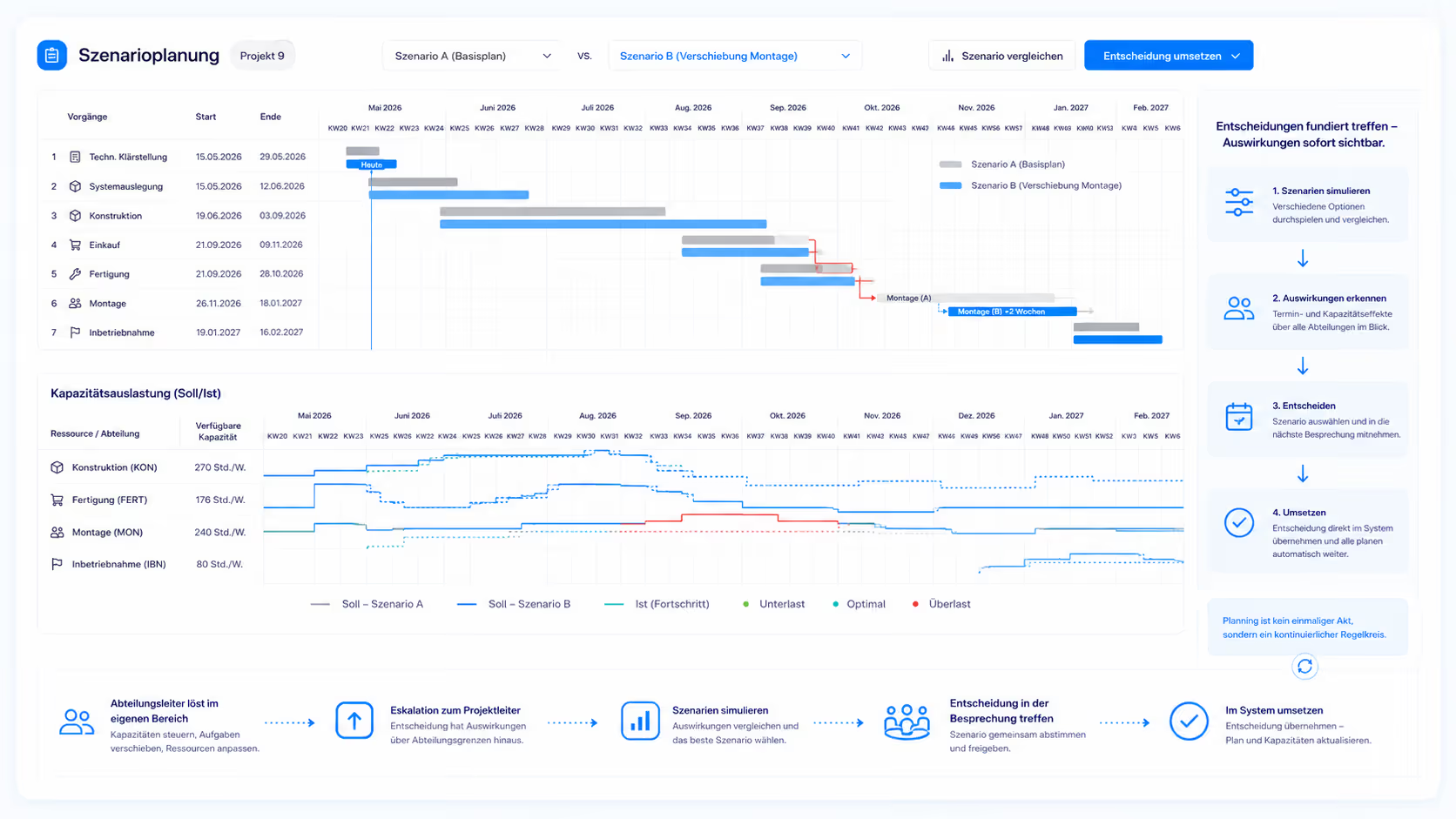
- Make the comparison visible: Set demand against supply in a load profile. Only the over- and under-coverage per period shows where the bottleneck really sits and from when it takes effect.
- Test measures in a scenario: Try out shifting the load in time (capacity balancing) and changing the supply (capacity adjustment) before you decide — including the effect on follow-up projects and committed delivery dates.
- Update on a rolling basis: Refresh the plan at a cadence agreed in advance and treated as binding, and feed actual progress reports from execution back into the planning — that is the only way the estimates from step 2 become more reliable from round to round.
How Linetrack Supports Capacity Planning
Linetrack is a browser-based platform for industrial companies that brings together capacity, resource, and project planning in a single system. Instead of separate Excel plans per department, sales, project management, specialist departments, and site managers all work from a shared data foundation: demand is estimated as a forecast during outline planning, the departments refine it down to individual staff, and the utilization of teams and departments stays visible across all projects.
How that shared data basis comes about, and which conflicts it surfaces early, is described on the resource and capacity planning page. The features behind it — forecasting, detailed planning, utilization monitoring — are on the utilization and forecast product page.
FAQ
Frequently Asked Questions About Capacity Planning
Manage Capacities with Confidence — with Linetrack
Experience in a 30-minute live demo how Linetrack brings capacity planning in your industrial company onto a central platform: real-time utilization, skill matrix, multi-project overview, and ERP integration in one system.