Industry focus
Project management in custom machine building
In brief
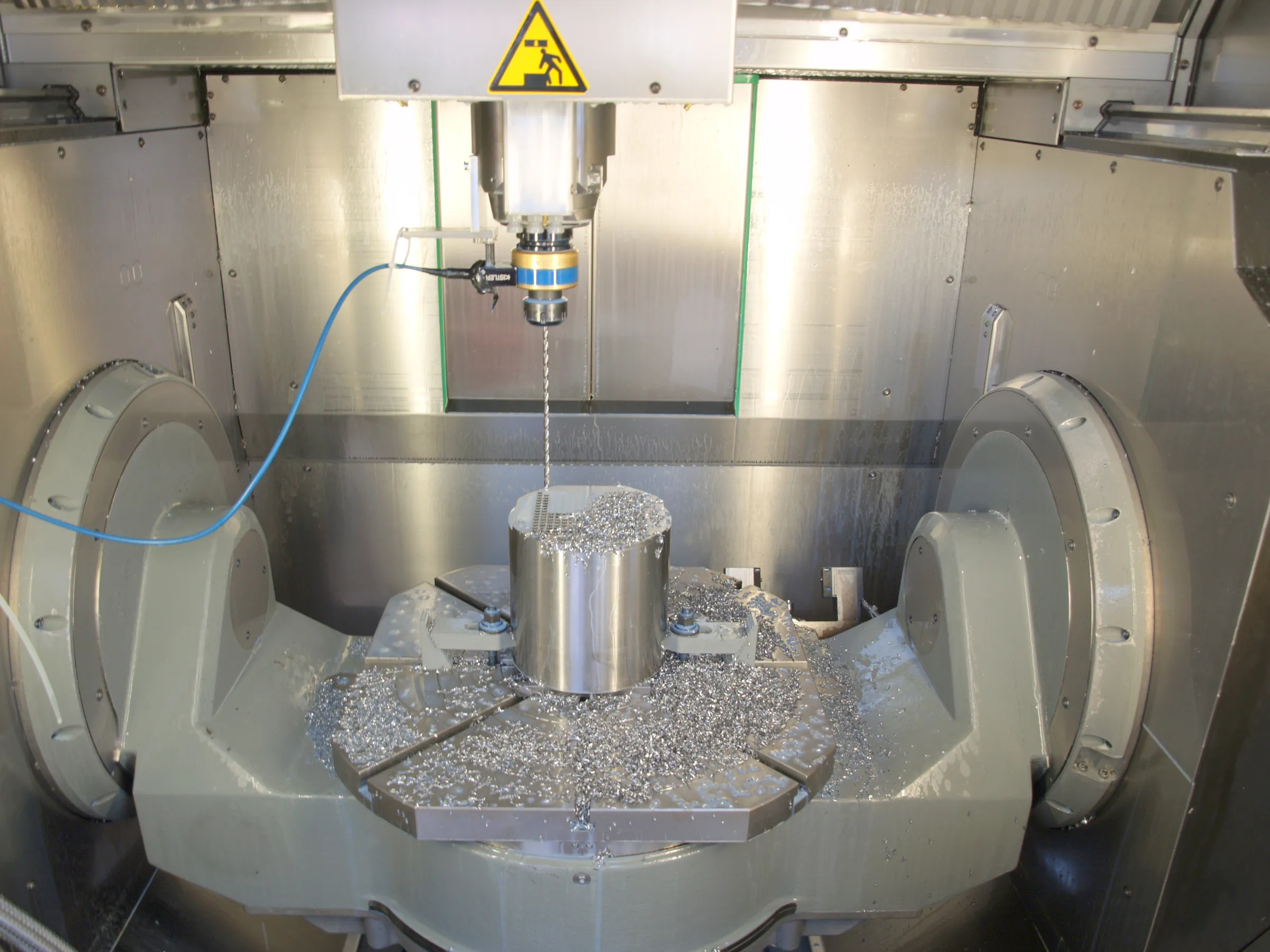
Custom machine building means one-off engineering: every machine is designed once, for one customer. What is individual about it is the component level. The sequence above it repeats from order to order – sales, development, design, purchasing, manufacturing, assembly, commissioning – and at that activity level, planning differs little from the rest of mechanical and plant engineering. The phases depend on each other as a fixed chain, and the same design engineers, production specialists, and fitters work on several customer orders at once. Linetrack maps dates and capacity in one shared data set, so a delay in the design phase of one order becomes visible before it puts the assembly date of another at risk.



4000 +
completed
industrial projects
270 +
parallel projects
at one customer
1512 +
projects under
parallel control
10
working days from
kick-off to go-live
Full survey of all productive Linetrack implementations across every industry, as of August 2026. No separate figures exist for custom machine building on its own – these numbers document the platform, not this segment.
The reality in custom machine building
What custom machine building demands of planning
A special-purpose machine is built once, not a hundred times. That changes what project planning has to deliver. Four patterns that recur throughout custom machine building.
No two projects are alike
What is new in every order is the component level: which assemblies are built, which special parts are bought in, and what depends on what. The sequence above it repeats. A template therefore carries down to a certain depth, and no further.

Design, manufacturing, assembly, and commissioning form a chain
Each phase builds on the one before it. If design slips, the start of manufacturing shifts with it – and assembly and commissioning follow.

The same specialists work across several orders
Design engineers, production specialists, and fitters are scheduled across several parallel customer orders at once. Who is free for which order, and when, is hard to read from individual order plans alone.
A delay can reach into another order
If one customer order ties up design longer than planned, that same capacity is missing for the next order. Without a cross-project view, that only becomes visible once the assembly slot is already at risk.
The most common objection
“Too individual for a system” – depends on the level
Custom machine builders often see themselves as a manufactory: every machine a one-off, every project different. For many, the conclusion is that none of it can be mapped in a planning system. At component level, that holds. At the level above it, where planning actually happens, it does not.
Activity level. Sales, development, design, purchasing, manufacturing, assembly, commissioning: this chain is in almost every order, and in the same sequence. Set the project plan up at this level and planning in custom machine building looks much like planning in plant engineering. A standard plan carries here.
Component level. Which assemblies are built, which special parts are bought in, and what depends on what is different in every project. This is where planning genuinely gets laborious. For a reliable start, though, you do not need to go that deep.
The principle. Plan as precisely as necessary, not as precisely as possible. Planning depth is a decision: every additional level costs upkeep and only pays off once dates or capacity would otherwise not hold. In practice you start at activity level and go deeper only where it hurts.
Krüger & Salecker started exactly that way: a pattern that already existed in-house became the standard project plan, split into elements with one responsible department each. New projects have been created from it ever since. Set out in the Krüger & Salecker case study.
- Sales
- Development
- Design
- Purchasing
- Manufacturing
- Assembly
- Commissioning
Assemblies, special parts, bought-in components – different in every order
A custom machine project from quotation to commissioning
Across the entire lifecycle – every phase with its dates, resources, and dependencies in one system.
This is the activity level from the section above, written out. A custom machine project runs through these seven phases from quotation to commissioning at the customer's site. Every phase has its own dates, ties up its own resources, and depends on the one before it: if technical clarification in sales drags on, development starts later and everything behind it shifts with it.
This is exactly where separate tools fall short. They map individual phases, but not the continuous flow. In Linetrack the entire project lifecycle sits in one system, with every dependency between the phases. So it is visible at any time how a late special part affects assembly and commissioning, and which specialists are needed when.
The way out of Excel chaos
One data foundation for
all projects, departments, and resources
The solution is not another Excel list, and not an ERP extension either. The ERP knows what has happened – not what happens if an order is accepted tomorrow. One-off engineering needs its own forward-looking view.
Forecast planning in sales: check promised dates against real utilisation before they are promised
Cross-project capacity view: see which customer order is currently tying up the design engineers – and where capacity is free
Every department in one system: from quotation to commissioning, without keeping three sets of lists
Suppliers and outsourced work visible in the plan – in custom machine building the bought-in part is often a one-off itself
Simulate scenarios instead of debating them: calculate the best response to a delay or a breakdown
For the first time, management, project leads, and departments have full visibility of what is happening where – without endlessly maintaining lists. And they can decide: on new enquiries as well as on incidents in a running order. What such a switch looks like in practice is set out in the MSG Solutions case study – the custom machine builder from Schmallenberg replaced a PM system the departments never got into, and now plans across departments in the same system. At Krüger & Salecker, the work breakdown structure sits in Linetrack: each department maintains its own element, and the overall status follows from that instead of from a round of enquiries.
In practice
What custom machine builders achieve with Linetrack
The benefit shows up where Excel lists and gut feeling used to rule. In practice, status meetings halve: the current state is in the system at any time instead of being collected weekly from scattered lists.
Because bottlenecks and delays become visible earlier, the ability to react to disruptions rises noticeably. With one-off engineering that counts double: a late special part cannot be replaced from stock, so the response has to run through the plan.
The most important effect cannot be expressed in a single figure: management, project leads, and departments have full visibility of what is happening where for the first time – and can decide, on new orders as well as on incidents in ongoing work.
Customer experience
What our customers in custom machine building say
There is a full story behind both of these voices: the Krüger & Salecker case study – the forming machine builder from Bad Schwartau has tracked and managed its project data in one place ever since.
MSG Solutions uses Linetrack in project management and across departments to plan and steer projects efficiently. The system has completely replaced our old PM tool and now serves as the central platform for scheduling and resource planning.
Thanks to a shared data foundation, we always have a clear overview of the status of all projects and save significant time on portfolio analysis. The workflows are ideally matched to the requirements of mechanical and plant engineering – planning and decisions can be made in a practical, well-founded way as a result.
We especially appreciate the support: the Linetrack team responds quickly, is flexible with further development, and trains our staff in a hands-on way tailored to our processes. You can tell that real mechanical engineering experience goes into it.


"As a mechanical engineering company, we always struggled to track and manage project data efficiently. With Linetrack we've not only brought transparency into our projects but also significantly increased our productivity.
What impressed us most was the user-friendliness and the way the data is presented, which let us always keep everything in view.
I can recommend Linetrack to other companies without reservation. It's easy to use, highly efficient, and has genuinely simplified our business.
Many thanks to the Linetrack team for a great solution and excellent support!"
FAQ
Frequently asked questions
Still have questions?
Book a slot with our team.
What makes custom machine building structurally different from series machine building, for planning?
What makes custom machine building structurally different from series machine building, for planning?
Are there reference customers specifically in custom machine building?
Are there reference customers specifically in custom machine building?
How are suppliers for special parts integrated?
How are suppliers for special parts integrated?
Is Linetrack suitable for one-off builds with a short lead time?
Is Linetrack suitable for one-off builds with a short lead time?
How does a delay in one customer order affect another?
How does a delay in one customer order affect another?
Does Linetrack replace design planning in CAD or PLM?
Does Linetrack replace design planning in CAD or PLM?
Are custom machine projects too individual for project management software?
Are custom machine projects too individual for project management software?
How detailed does a project plan in custom machine building have to be?
How detailed does a project plan in custom machine building have to be?
Learn more
Linetrack in detail
The functions behind connected schedule and capacity planning: