Case study
Krüger & Salecker Maschinenbau: one work breakdown structure for every department with Linetrack
- Forming machines
- Compact lines
- Rolling and sprinkling machines
- Extruders for pasty masses

What does Krüger & Salecker use Linetrack for?
Krüger & Salecker Maschinenbau, based in Bad Schwartau, builds forming machines for the food, pharma and petfood industries. The company plans its projects in Linetrack through a work breakdown structure: a standard plan based on its own template is divided into elements, the responsible departments maintain theirs and report progress there. The status of the whole project follows from that.
The company
What Krüger & Salecker builds
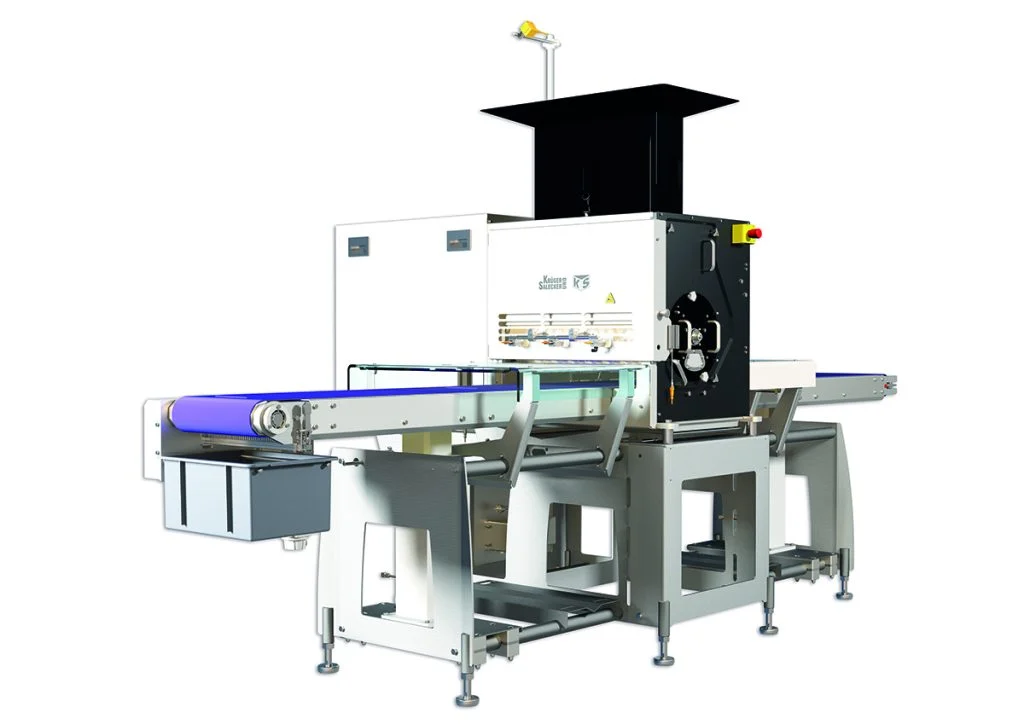
Robert Krüger and Heinrich Salecker founded the company on 1 July 1948 in a cellar workshop in Lübeck, where they first made pots, pans and cutlery. The first machine for the food industry followed in 1955 and moulded marzipan. Today the company is based in Bad Schwartau and builds forming machines that bring pasty, pourable and gel-like masses into shape – for confectionery and bar producers, for petfood, for pharma and nutraceuticals, and for the chemical industry.
An order is either a single machine or a complete line. The Compact Line, for instance, puts a forming machine, a casting machine and an enrobing machine in a row across just under eight metres, with two of the three units coming from other manufacturers. Design, manufacturing, assembly and commissioning at the customer's site interlock along the way, and part of the line sits with suppliers. That is exactly what Linetrack is built for in mechanical and plant engineering, including bringing suppliers into the same project plan.
Customer voice
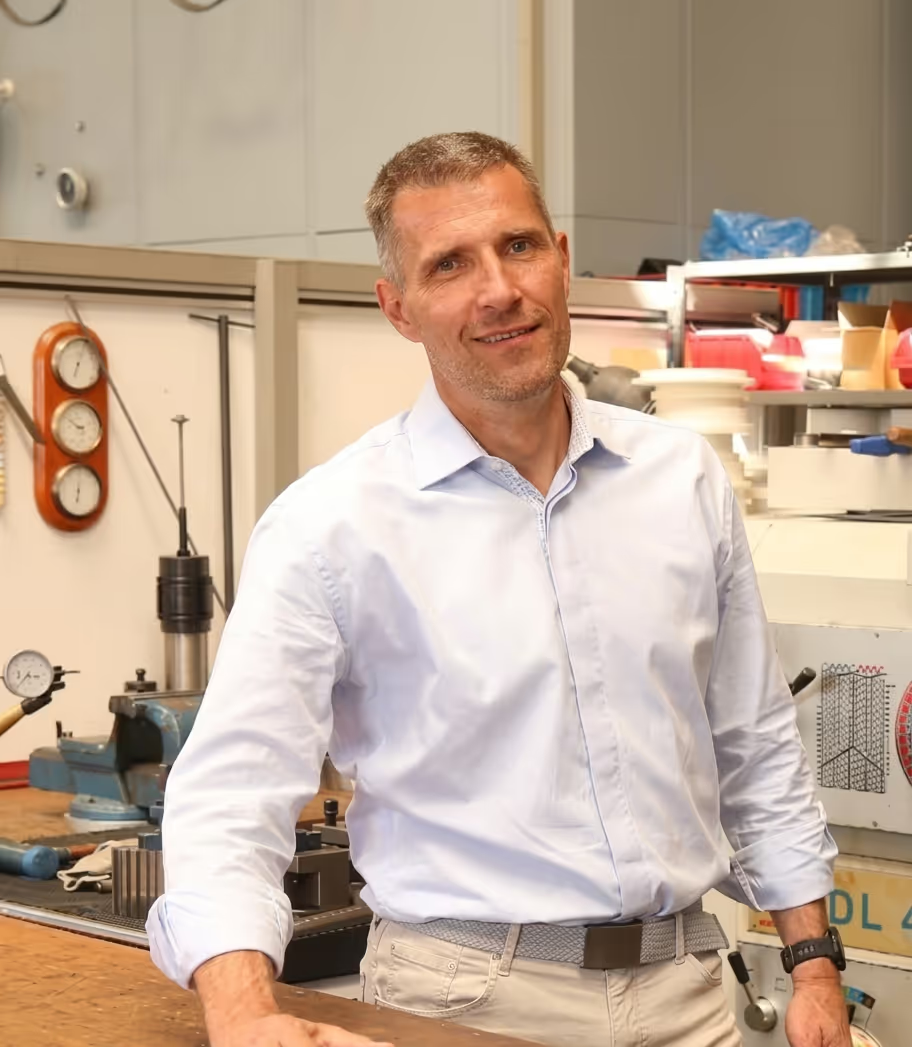
“Everything always in view”
„As a company in mechanical engineering, we always struggled to track and manage project data efficiently. With Linetrack, we've not only brought transparency to our projects but also significantly increased our productivity.
We were especially impressed by the usability and the way data is presented, which lets us keep everything in view at all times.
I can recommend Linetrack to other companies without reservation. It's easy to use, highly efficient, and has genuinely simplified our business.
Many thanks to the Linetrack team for a great solution and excellent support!“
The starting point
What was missing: a shared structure
Tammo Bettex names the starting point in the quote above: tracking and managing project data efficiently was always difficult for the company.
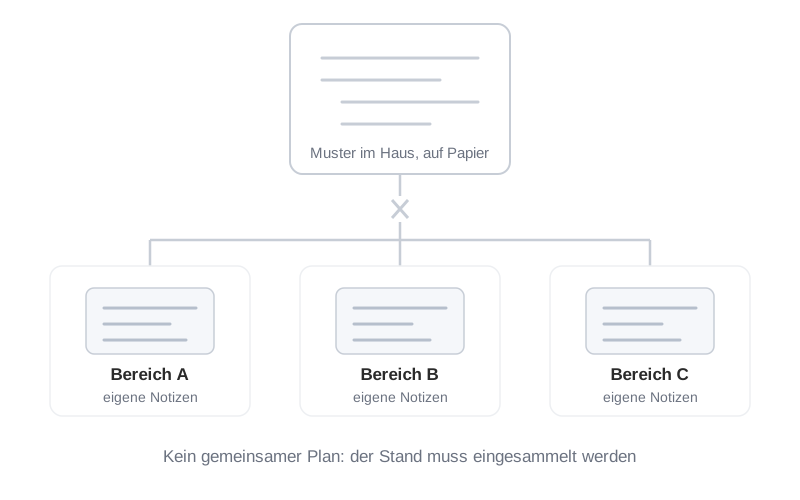
A template for how a work breakdown structure should be built already existed in house. What was missing was the system around it – a plan the different departments complete together, rather than each working on their own with the status collected afterwards.
The rollout
From the in-house template to a standard project plan
Krüger & Salecker came to Linetrack in 2023, the founding year, as the first customer. The company has worked with it continuously since.
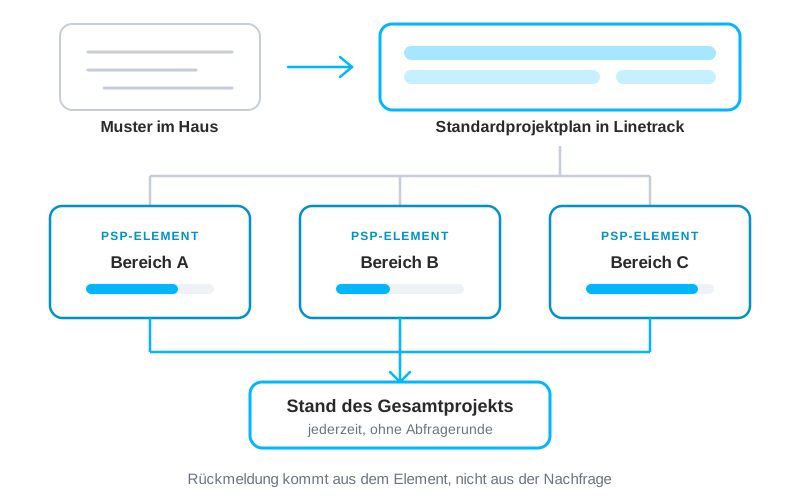
The starting point was the template that already existed in house. From it came a standard project plan in Linetrack, divided into the elements of the work breakdown structure. Each element has a responsible department.
New projects have been created from that standard plan ever since. The departments work in their elements and report progress from there.
The collaboration also turned into product. From the start, Krüger & Salecker gave feedback from daily practice – what is easy to operate, what does not work, which functions are missing, and where time actually adds up. Part of what sits in the core of Linetrack today came out of that. How a rollout works in general is described under implementing Linetrack.
The solution
What runs differently today
The work breakdown structure is the core. Four things hang off it.
A standard plan instead of a blank sheet
New projects are created from a standard project plan based on Krüger & Salecker's own template. The breakdown is there before the first date is set, and it looks the same in every project – which is what makes projects comparable with one another. See collaborative coarse and detailed planning.

Each department maintains its element
The plan is divided into elements, each with a responsible department. That is where the work happens and where the progress report comes from – on the same plan, not on a copy of it. See collaborative project management and tasks and tracking.
The overall status is computed from the elements
Because the departments report in their own elements, the status of the whole project is available at any time, and alongside it, where each department stands within it. The status report is the system state, not the result of a chasing round. See multi-project management.
A plan that does not go stale
A work breakdown structure built at kick-off and then left alone stops describing anything after a few weeks. Here the departments keep it current as they work, because reporting is the same gesture as doing the work. See project planning and control.
The result
One plan every department stands on
Three things hold today.
What holds today
A standard project plan from the in-house template
The template that already existed in house is the blueprint for new projects in Linetrack – divided into the elements of the work breakdown structure.
Departments report their own progress
Each element has a responsible department. Progress comes from there rather than being collected by someone.
An overview of the whole project
The status of the overall project is available at any time, and alongside it, where each department stands within it.
Frequent questions
Questions about the work breakdown structure in mechanical engineering
Your projects, not our demo dataset
30 minutes on one of your real project examples. After that you will know whether the planning logic fits your order structure.
What does Krüger & Salecker use Linetrack for?
What does Krüger & Salecker use Linetrack for?
What is a work breakdown structure, and how do several departments fill it together?
What is a work breakdown structure, and how do several departments fill it together?
How do you keep track of project data across several machine projects?
How do you keep track of project data across several machine projects?
Why is Excel not enough for a work breakdown structure?
Why is Excel not enough for a work breakdown structure?
How long does it take to implement Linetrack?
How long does it take to implement Linetrack?
Does Linetrack suit food machinery manufacturing as well?
Does Linetrack suit food machinery manufacturing as well?
Learn more
Linetrack in detail
The functions behind the work breakdown structure and the project overview: