Case study
LANG Technik: development and automation projects in view with Linetrack
- Zero-point clamping
- Workpiece clamping
- Robot integration
- Cell automation

What does LANG Technik use Linetrack for?
LANG Technik, a maker of clamping technology and automation solutions for machining production based in Holzmaden near Stuttgart, uses Linetrack in its development department. Development projects are planned and tracked across departments: each department involved runs its own tasks in the plan and works directly with development, which keeps a complete overview of every project as a result.
The company
What LANG Technik builds
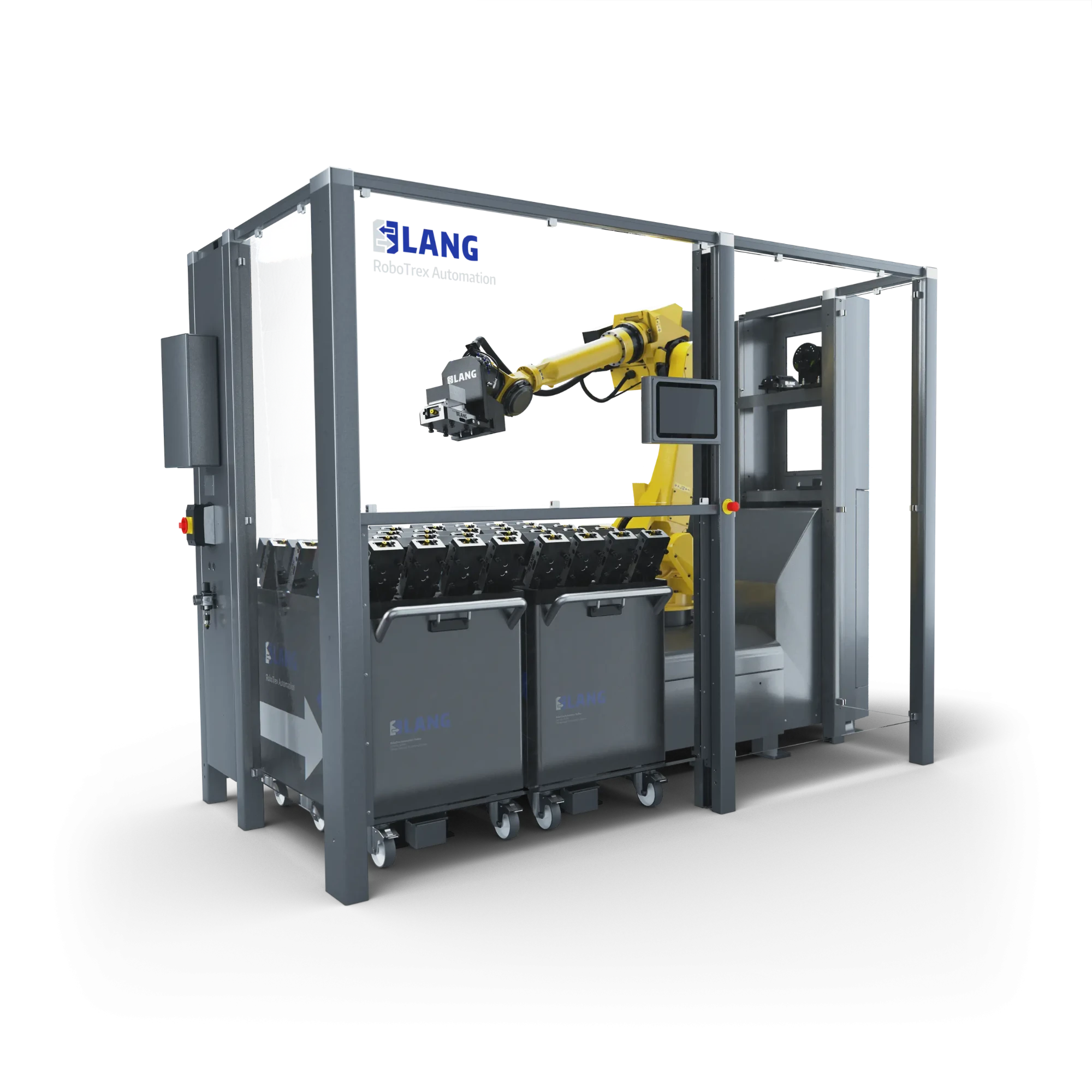
Josef Lang founded the company in 1982 as LANG Werkzeugbau. Since 2014, LANG Technik GmbH has been headquartered in Holzmaden near Stuttgart, with a training and technology centre in Neuhausen auf den Fildern and its own locations in the US, France, and Switzerland. The portfolio covers workpiece clamping and zero-point clamping for machining production, plus automation solutions for robot integration and cell automation. The systems run at customers in machining, medical technology, aerospace, and motorsport.
That's where the planning demand Philipp Lang describes in his quote comes from. New product lines, the automation of LANG Technik's own facilities, and international expansion run in parallel - since 2019 with its own automation and development building at headquarters. Linetrack is built exactly for this combination of development and automation in development departments - and equally in mechanical and plant engineering.
Customer voice
"A clear added value for our work"
„Linetrack has helped us keep track of complex development and automation projects. Project plans are now created collaboratively across departments and tracked automatically.
What convinces us most is the ease of use, combined with close contact with the Linetrack team. The flexible rollout and hands-on training meant our team adopted the solution quickly - a clear added value for our work.“
The starting point
How did LANG Technik plan before Linetrack?
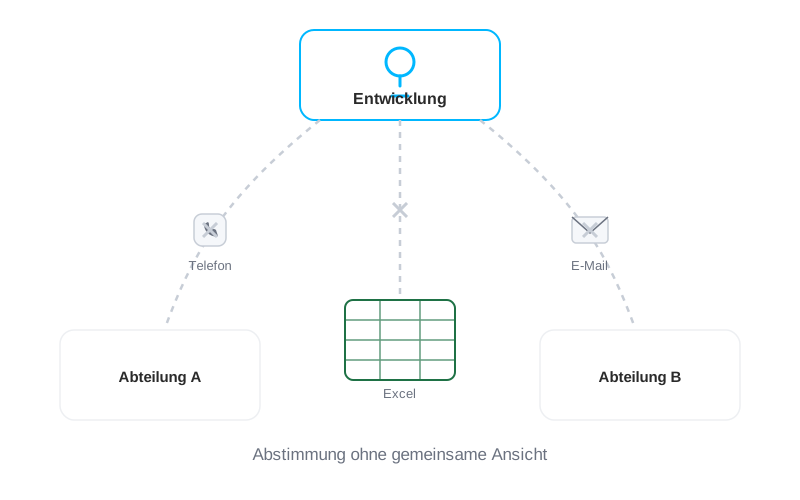
Before Linetrack, development projects at LANG Technik ran on Excel, email, and phone. There was no system where development and the departments involved saw the same status.
A project's status was scattered - across spreadsheets, email threads, and people's memory. Anyone who wanted to know where a development project stood had to call or write an email, often to more than one department.
That cost time above all at the interface between development and departments: every status question ran through a phone call or an email instead of a shared plan both sides could see.
The rollout
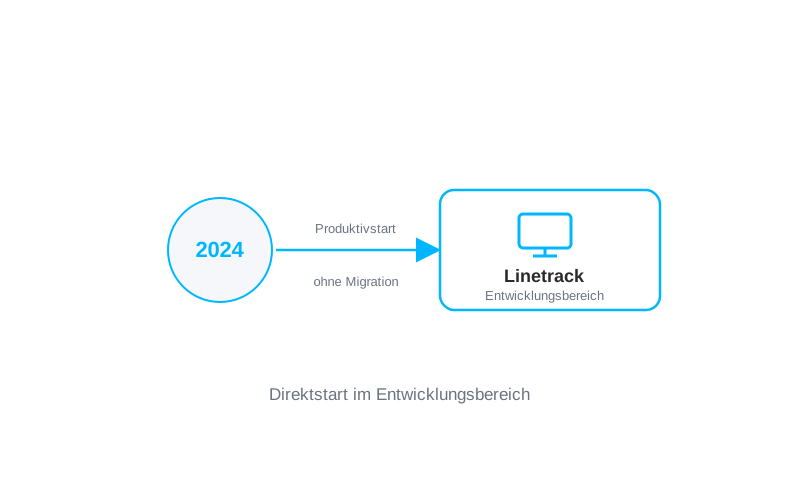
A direct start, no migration
Linetrack went live in LANG Technik's development department in 2024. There was no legacy-data migration - the department started directly in Linetrack, without carrying over Excel lists or email threads.
The rollout stayed deliberately limited to the development department. There are no interfaces to other systems - the development department works independently in Linetrack, without a connection to an ERP or time tracking.
The solution
What Philipp Lang's quote means in practice
Four points from the quote, broken down.
Every department with its own tasks in the same project
At LANG Technik, several departments access the same development projects. Each department head, or department, runs its own tasks inside that plan and works directly with development - instead of going through intermediate lists or asking around. See collaborative coarse and detailed planning.


A complete overview for development
Because every department involved works inside the same plan, development has everything in one place: what's happening in each project shows up in the system instead of being asked for individually. Dates and tasks are tracked automatically along the way. See tasks and tracking.
Easy to use from day one
An interface that departments without a project management background can use directly decides whether a system becomes a tool for everyone or stays an island for specialists. LANG Technik names exactly this as one reason the team adopted it quickly.
Flexible rollout, hands-on training
The rollout was adapted to how LANG Technik works, with training on the team's own projects instead of a demo dataset. That's why the team adopted the solution quickly. More on the process: Rolling out Linetrack.
The result
Fewer follow-ups, more traceability
Since going live in 2024, day-to-day work in the development department has changed visibly.
What's changed since 2024
Fewer calls and email back-and-forth
Questions about project status now run through the system instead of a phone call or an email thread.
A complete overview
Development sees the status of every development project in one place, instead of asking each department individually.
Clear traceability
What happened on a development project, and when, can be traced in the system instead of reconstructed from memory or an email thread.
Frequently asked questions
Questions about project management software for development and automation
Still have questions?
Book a meeting with our team.
What project management software fits development and automation projects?
What project management software fits development and automation projects?
How long does rolling out multi-project management software take?
How long does rolling out multi-project management software take?
Can Linetrack connect to an existing ERP system?
Can Linetrack connect to an existing ERP system?
What sets Linetrack apart from Asana, Trello, or Monday?
What sets Linetrack apart from Asana, Trello, or Monday?
How does collaborative project management work across departments?
How does collaborative project management work across departments?
Does LANG Technik use every Linetrack module?
Does LANG Technik use every Linetrack module?
Learn more
Linetrack in detail
The functions behind cross-departmental scheduling and resource planning: