Industry Focus
Project Control for Building, Energy & Automation Systems
Short answer
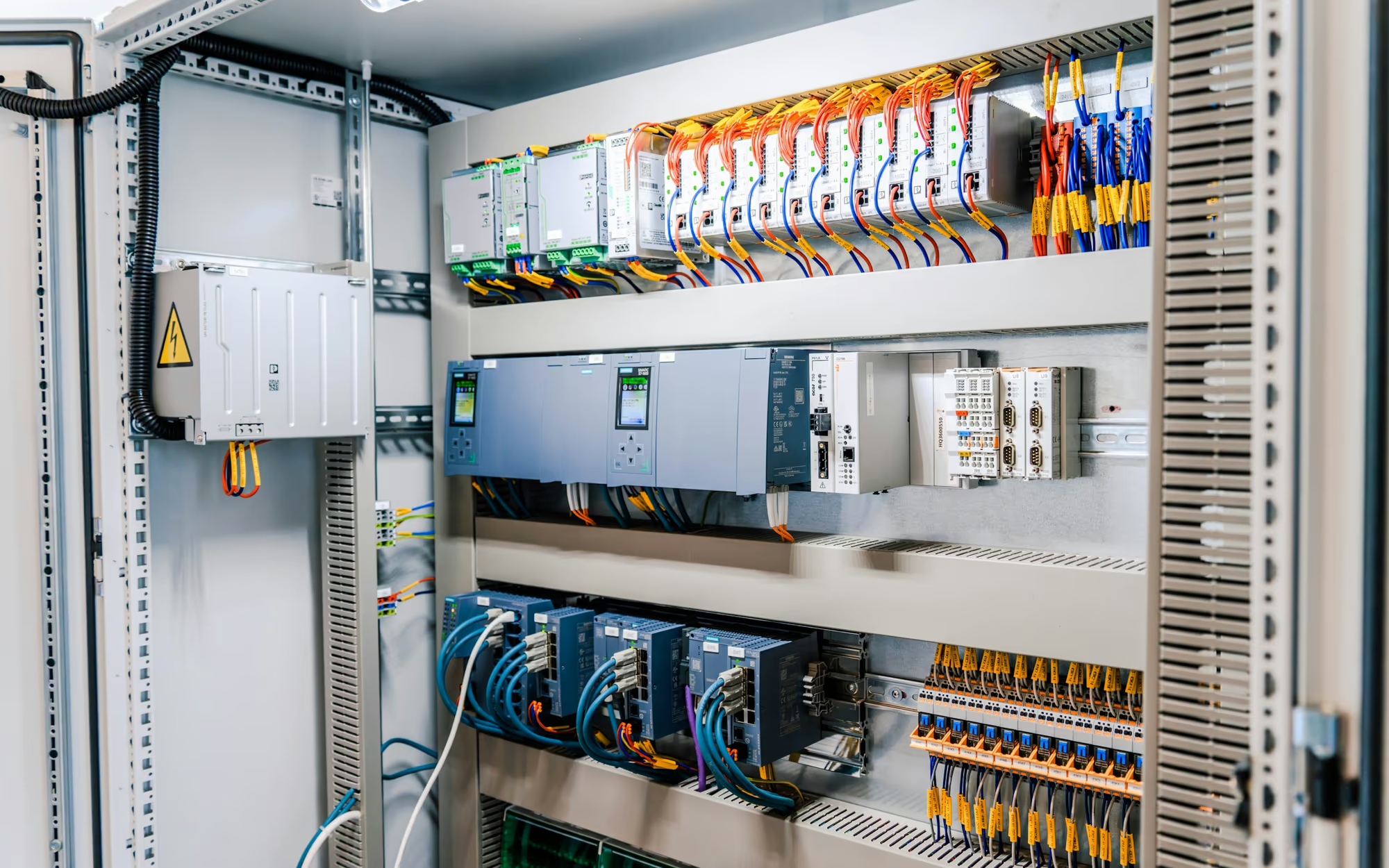
Project management in building, energy and automation systems means steering projects of very different shapes at the same time - from a single distribution board retrofit to building automation across an entire site. The phases in between follow no standard sequence: electrical design, procurement of switchgear and field devices, control cabinet build, PLC and BMS programming, visualisation, on-site installation, balancing and handover - combined differently in every project. On top of that, the other trades and the main contractor's construction schedule hang in the same plan, and project leads come out of the technical departments, running a department and a project at once. Linetrack from Stuttgart has supported more than 4,000 completed industrial projects - in use at the STOLL Group, Prola Automation, GRÜBL Automatisierungstechnik and InVENTer.
















4000 +
completed
industrial projects
270 +
parallel projects
at one customer
1512 +
projects steered
in parallel
10
working days from
kick-off to go-live
Figures from live Linetrack implementations across every industry we serve, as of August 2026.
The reality in building and energy systems
Why projects in building and
automation systems get away from you
Not because people plan badly - but because every discipline built its own list over the years and none of them are connected. Four patterns that repeat in almost every company.
Every discipline plans on its own
Electrical design keeps a project list next to EPLAN, the cabinet shop keeps a production list, BMS programming keeps its own spreadsheet, installation hangs off the main contractor's construction schedule. Four plans, no connection - and the same person is named differently in each. In practice, Linetrack customers replace several such separate lists at once, four out of five of them plain Excel files.

Handover dates from gut feeling
Dates for balancing and handover are committed without anyone being able to say how loaded electrical design, the cabinet shop, programming and commissioning actually are over the coming weeks. The discussion runs on subjective estimates, not on data. Missing transparency is the trigger every single Linetrack customer named before going live.

The bottleneck always sits with the same people
BMS programmers and commissioning engineers are on several properties at once and spend half the week on site. Meanwhile hours lie idle in electrical design or the cabinet shop. Without a cross-project view, nobody knows where the bottleneck really sits and where capacity is free.
Material and trades run past the plan
Lead times for switchgear, controllers and field devices sit in the purchasing list, not in the schedule. The ventilation contractor reports status by email, the main contractor moves the installation week over the phone. Whatever two people agree between them stays between them - invisible to everyone else until it surfaces too late.
Its own rules
Why project management here
works differently than elsewhere
Projects in building, energy and automation systems follow different rules than construction or IT projects. Three traits make the difference - and explain why standard project management fails here.
No project runs like the last one
The range runs from a single distribution board retrofit to building automation across an entire site. The standard sequence of development, design and manufacturing that most tools assume doesn't hold: electrical design, control cabinet build, PLC and BMS programming, visualisation, installation and balancing come on top - combined differently in every project. A plan that only knows one fixed phase sequence fits half the projects badly.
The project lead comes out of a technical department
There is rarely a dedicated project management layer above the project. Usually someone from electrical design, the cabinet shop or automation takes it on - and then runs their department and the project at the same time. Both roles draw on the same people. Doing both in one person calls for two views of the same capacity: the project's and the department's.
The plan doesn't end at the workshop door
Electrical design and cabinet build run in house; installation, balancing and handover happen at the property - and in between, the main contractor, the other trades and the operator all hang in the same schedule. Unlike a pure construction site there is no single place where everything sorts itself out: part of the project sits in your own workshop, part at the property, part with the supplier.
A building services project from electrical design to handover
Across the entire lifecycle - every phase with its dates, resources and dependencies in one system.
A project in building, energy and automation systems runs through phases that no standard sequence knows - from electrical design through procurement, control cabinet build and programming to on-site installation and balancing. Every phase has its own dates, ties up its own people and hangs off the one before it: if electrical design is late, the cabinet shop can't start - and the handover date slips with it. And not every project contains the same phases.
This is exactly where separate tools fall short. They map individual phases, but not the continuous flow - and certainly not a sequence that changes from project to project. In Linetrack the whole project lifecycle lives in one system, with every dependency between the phases and without a fixed template. So it is visible at any time how a late controller affects cabinet build, the installation week and handover, and which people are needed when.
The way out of Excel chaos
One data foundation for
every project, department and trade
The answer is not another Excel list, and not an ERP extension either. The ERP knows what was ordered and what was invoiced - not whether the handover date still holds if another property lands tomorrow. Project control in building and automation systems needs its own forward-looking view.
Free phase chains per project: electrical design, cabinet build, programming, visualisation, installation, balancing - in whatever combination this one property needs
Cross-project capacity view: see which properties BMS programmers and commissioning engineers are actually tied up in - and where capacity is free
Project and department roles kept apart: the same person runs their department and their project without keeping two lists
The other trades and subcontractors visible in the plan, not in separate email threads
Simulate scenarios instead of debating them: work out the best response to late field devices or an absence before the handover date is missed
For the first time, management, project leads and departments have the full picture of what is happening where - without endlessly maintaining lists. And they can decide: on new projects as much as on incidents in ongoing work.
In this field Linetrack is in use at, among others, the STOLL Group, whose electrical engineering spans power engineering, building services and automation; Prola Automation from Switzerland, with industrial and building automation; and GRÜBL Automatisierungstechnik from Austria, with electrical design, control cabinet build and software planning. No written-up case study exists for these three yet; they are listed by name on the page Referenzen.
In practice
What building and automation companies achieve with Linetrack
The value shows up where four separate lists and gut feeling used to rule. In practice, status meetings halve: the current state sits in the system at all times, instead of being collected weekly from electrical design, the cabinet shop, programming and installation one by one.
Because bottlenecks and delays surface earlier, the ability to react to disruption rises noticeably - a late controller or a moved installation week shows while there is still room to replan. And because new properties are checked against your own workload, project costs fall: fewer unplanned subcontracts, no penalties from missed handover dates.
The most important effect can't be put in a single figure: management, project leads and departments have the full picture of what is happening where for the first time - and can decide, on new projects as much as on incidents in ongoing work.
FAQ
Frequently asked questions
Still have questions?
Book a call with our team.
What sets project management in building and automation systems apart from other industries?
What sets project management in building and automation systems apart from other industries?
Can a department lead also be the project lead?
Can a department lead also be the project lead?
Does Linetrack map phases like electrical design, cabinet build, BMS programming and balancing?
Does Linetrack map phases like electrical design, cabinet build, BMS programming and balancing?
Can the other trades and subcontractors be brought into the project?
Can the other trades and subcontractors be brought into the project?
Are there reference customers in building, energy and automation systems?
Are there reference customers in building, energy and automation systems?
Why isn't MS Project or Excel enough here?
Why isn't MS Project or Excel enough here?
Which companies in building, energy and automation systems is Linetrack a fit for?
Which companies in building, energy and automation systems is Linetrack a fit for?
Does Linetrack replace the ERP system?
Does Linetrack replace the ERP system?
Learn more
Linetrack in detail
The features behind connected schedule and capacity planning: